
Finding Scranton Resident Records
Start with the type of fact you need, not a broad name search. A Lackawanna County assessment or tax record can connect a parcel, its situs address, and an assessed owner. The Recorder of Deeds can then connect named parties to a dated property document. A historical household question belongs with the Albright Memorial local-history collections, while a court or probate question belongs with the court custodian. None of those sources is a live roster of everyone at an address. They are separate records with different dates, roles, and access rules.
For a Scranton residents directory search, keep the date and the record role beside every result. An owner can have a tax mailing address different from the property location. A deed party can be a past owner. A printed directory captures one edition year. That small discipline prevents a common error: treating one official hit as proof of a present household.
- Use the county property search or Tax Online when an address or parcel is known.
- Save the parcel number, property location, and dated owner role before moving to another record.
- Check the Recorder index for a conveyance or other recorded document tied to that parcel or name.
- For a past household, ask Albright Local History for the relevant city-directory, census, newspaper, or microfilm route.
- When no online index exists, request an identifiable record from the office that holds it.
Note: A second independent record is more useful than repeating the same result through several search screens.
Scranton Records Custodian Desk
Scranton is the Lackawanna County seat, so the county offices that keep the strongest property, probate, court, and election records are close to the city records that document permits and zoning. The county Assessment Office is the first stop for a parcel trail. The Recorder keeps recorded real-property documents. The Register of Wills and Clerk of Judicial Records handle their distinct estate, marriage, divorce, and court functions. City departments should be used for a specific municipal file, such as a permit or inspection, rather than as a substitute for county title records.
Recorder of Deeds
123 Wyoming Avenue, Suite 218
Scranton, PA 18503
570-963-6775
Assessment Office
123 Wyoming Avenue, second floor
Scranton, PA 18503
570-963-6728
Scranton Right-to-Know Office
City Hall, 340 N. Washington Avenue
Scranton, PA 18503
570-348-4100 ext. 9409
The county Recorder lists document-search access for 1957 to the present and separate index-book access for 1878 through 1956. The date split matters when the trail crosses generations. It also means a missing name in one system is not a reason to skip the other.
Scranton Address First Search
An address is often the cleanest starting point because it can be tied to a parcel identifier. The Lackawanna assessment landing page states that the public database searches by property owner, street address, or parcel ID. Its later basic-search screen identifies Parcel Number, Owner Name, Street, and Municipality, including a SCRANTON CITY option. Results can be sorted by parcel, owner, location, or municipality. That is a property-record workflow, not a list of people who occupy each building.
The county Tax Online route adds a different set of fields. It separates Property Information from Owner Information, showing PIN, Location Address, bill type, owner name, mailing address, city, and ZIP Code. Use the house number and street for the location field, then preserve the distinction between the situs address and any mailing address. Both are useful clues, but neither answers every resident question.
| Assessment field | Input type | Use in a Scranton record trail |
|---|---|---|
| Parcel Number | Identifier | Reduces same-street ambiguity and links the parcel to later research. |
| Owner Name | Name | Finds assessed-owner records when a property connection is known. |
| Street | Address | Locates a property record by address rather than a broad resident search. |
| Municipality | Selection | Lets a searcher narrow to Scranton City where that option applies. |
Note: The assessment database displayed a maintenance notice during research, so a temporary portal issue is not evidence that the record does not exist.
Reading Scranton Property Fields
The Lackawanna Assessment Database is the official starting screen for the county property trail. The captured screen shows the search entry points rather than an individual parcel result. It is still useful because it confirms the public search methods before a name or address is entered.
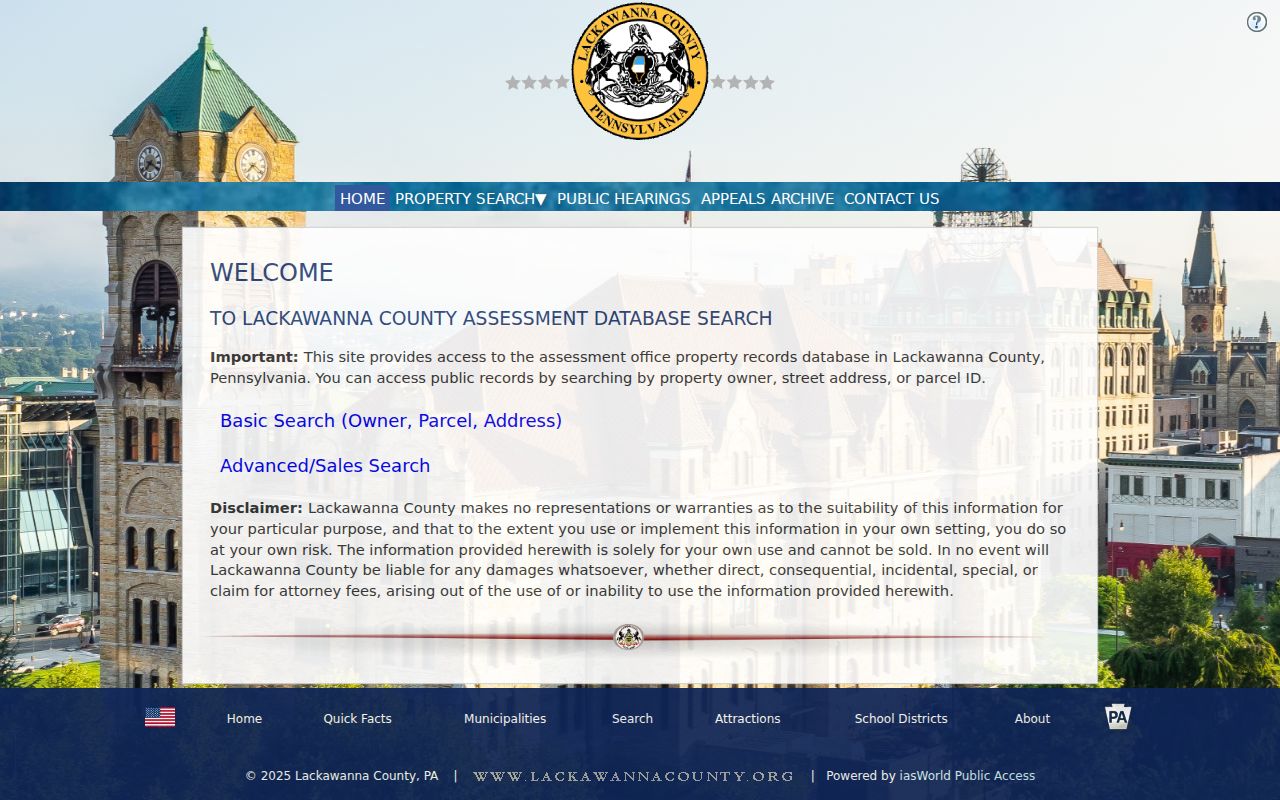
The screen reinforces the proper sequence: identify the parcel, read the location and owner fields in context, then verify a deed or other dated record when the question needs more than assessed ownership. It should not be read as an occupancy tool.
- Parcel
- A defined piece of real property used in the county assessment system.
- Situs address
- The property location, which can differ from the address where an owner receives tax mail.
- PIN
- A parcel identification number used to connect county tax and property records.
- Index
- A finding aid that points to a record; it is not the full underlying document.
Following Scranton Deed Trails
The Recorder of Deeds offers a strong Scranton residents directory trail when property is part of the question. County guidance separates Online Index Book Search for 1878 through 1956 from Online Document Search for 1957 to the present. Work backward from a current parcel and owner by locating the latest conveyance, noting the grantor and grantee roles, then looking for the prior seller's acquisition. A legal description, lot, block, book and page, or UPI can bridge an older address form more reliably than a street number alone.
Recorder guidance calls the online index comparable to a library card catalog and asks users to try spelling variants and other criteria. That warning matters for Scranton surnames and recorded parties. A name hit can point to a document, but the document or an official copy supplies the context needed before a conclusion is drawn. The office will provide recording requirements and fee information, but it does not perform property searches by phone.
The Recorder office hub visibly separates the two online research eras and the related county access channels.
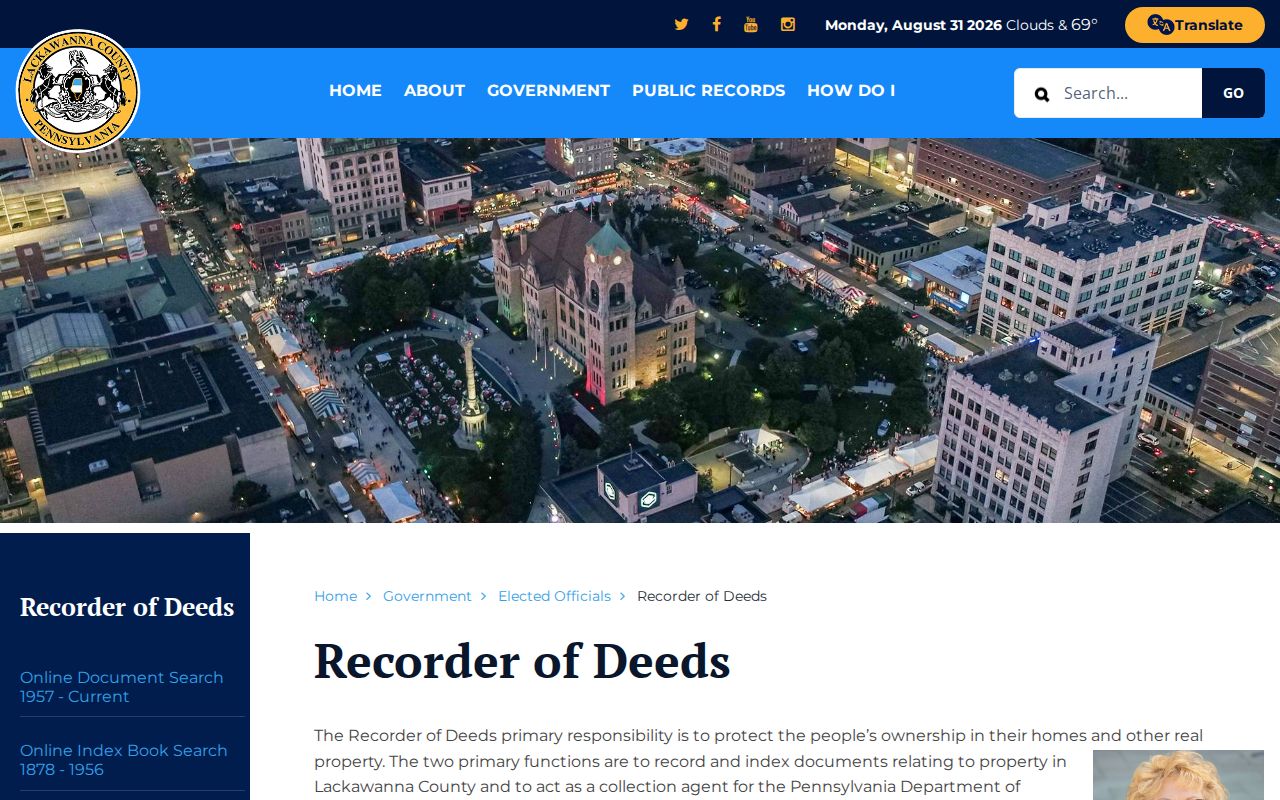
Use the date split as a routing rule. It helps a searcher move between the current document system and the historic index books instead of assuming one screen covers every Lackawanna transaction.
Scranton Court Docket Limits
The statewide Pennsylvania UJS Case Search provides a free public route for court case information, including the local court system. It can associate a named party with a dated proceeding, docket, or case status. That makes it a narrow verification source, not a list of Scranton residents and not a substitute for a complete official history. Match a name against the court, date, case number, and another independent record before treating it as the same person.
Public web access has real exclusions. Juvenile, expunged, pending-expungement, limited-access, and certain Common Pleas civil matters are not displayed. A result can also lag a filing. When the needed record is not online, the clerk or Magisterial District Court is the appropriate source for the local copy procedure. The absence of a web result can reflect access rules, coverage, spelling, or timing.
The UJS search form shown here is a public docket interface, not a personal profile.
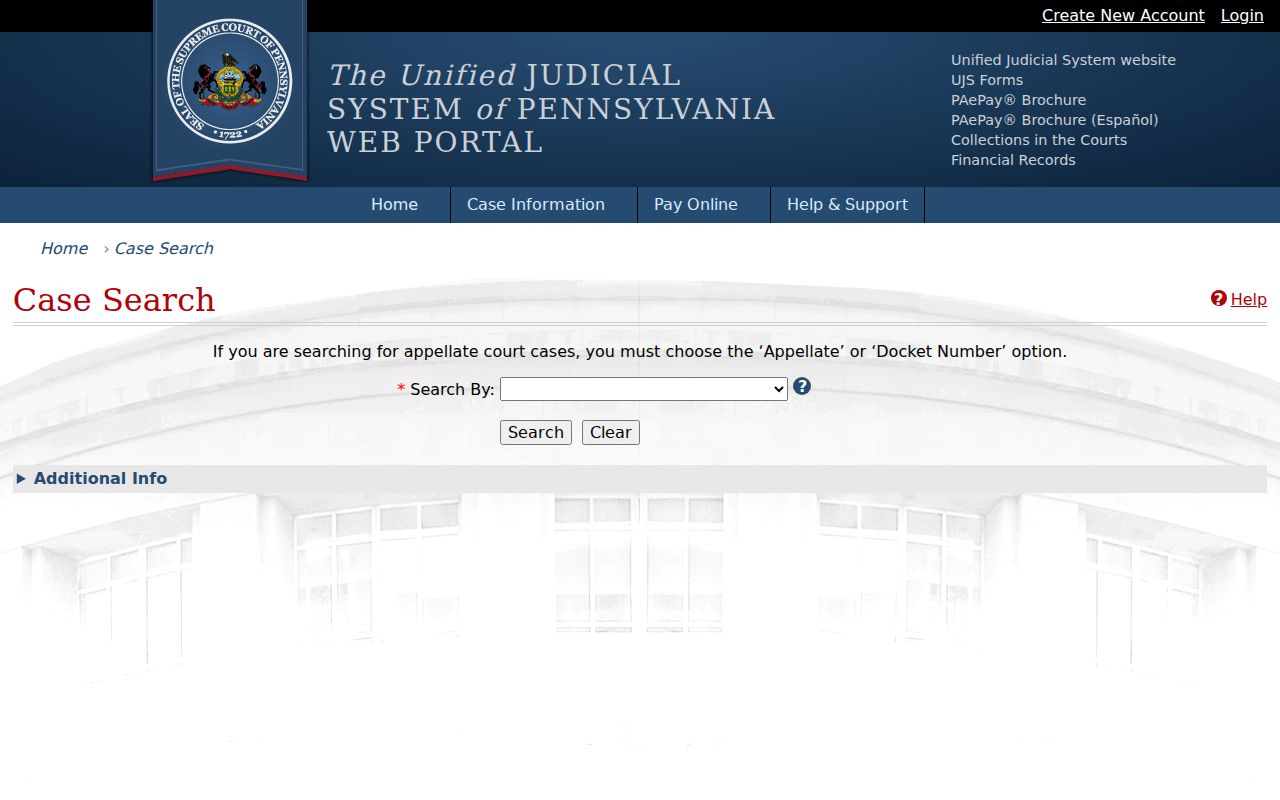
Use a docket result to anchor a date and official proceeding, then confirm the identity with a record that shares a reliable address, party role, or other lawful identifier.
Current Scranton Directory Sources
No master current directory lists every Scranton household. The most useful current sources are purpose-built records: the assessment and tax systems for property context, the Recorder index for recorded parties, individual voter-status tools for a limited civic check, and defined city files for a permit or inspection event. They should be chosen for the fact they can actually establish.
| Source | What it records | Custodian | Access limit |
|---|---|---|---|
| Assessment / Tax Online | Parcel, owner, situs and tax-mail relationship | Lackawanna County | Public search, not occupancy proof |
| Recorder index | Recorded property-document parties | Recorder of Deeds | Historic and current online eras differ |
| Voter status | Individual registration status | Pennsylvania elections system | Not a public street roster |
| Permit or code file | Defined address-related city event | Scranton Code Enforcement | Use the city record route and expect limits |
| Neighborhood-watch contacts | Public group contact and meeting information | City of Scranton | Not a member or household directory |
A one-person question needs the same restraint. The Scranton resident lookup route explains how to compare a dated property, court, directory, or probate record without overstating any one result.
Scranton Voter Record Boundaries
Pennsylvania's Voter Registration Status tools are the official individual-check path. They can be useful when a person is checking their own registration or when a lawful, limited confirmation is available through the proper channel. They do not turn election records into a Scranton street directory. State law controls voter-list access and protects particular information, so a list or status result should never be republished as a block roster.
The Address Confidentiality Program, commonly called Safe at Home, is another reason to treat address information carefully. Eligible participants can use a substitute address in covered public records. When an official result is limited or does not match another source, stop and consult the custodian rather than trying to work around a protected-address process.
Use records lawfully. Scranton public records can support family history, property research, civic questions, and reconnection. They must not be used to stalk, harass, intimidate, or harm anyone.
Scranton Library Directory Trail
For a past household, the strongest local route is the Lackawanna County Library System genealogy and local-history service at Scranton Public Library's Albright Memorial collection. The library identifies city directories, local-history books, maps, clipping files, photographs, newspapers, a biographical index, a photo index, catalog access, and a genealogy request form. Ask for a surname, the address form used in the period, and a narrow year range. That gives staff enough information to connect the question to the right shelf, microfilm run, or archival aid.
Older directory research needs a date check. The Historical Society documents early directories and an 1876 entry format, but a complete current shelf list for regular and reverse directories was not publicly verified in the research. Confirm the volume year and its abbreviation key before reading an entry as an address fact. Pair the printed edition with a census, deed, newspaper, or probate source when a family-history conclusion matters.
The library genealogy guide links the local collections and the historical record periods that make the Scranton directory shelf useful.
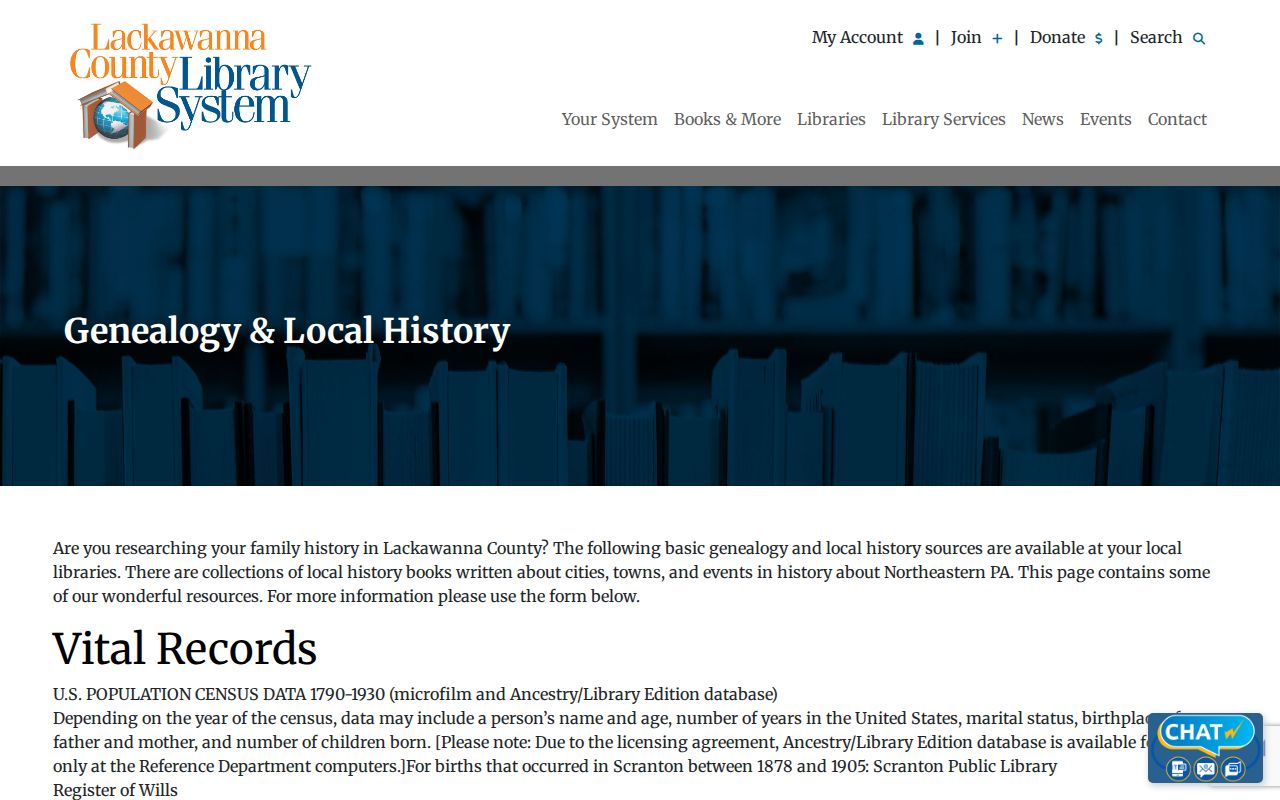
The collection is a research bridge between an old printed address and the broader local evidence found in newspapers, census material, maps, and vital-record microfilm.
Scranton's 1906 Vital Divide
Scranton has a practical records break that changes the correct custodian. The library genealogy guide identifies city birth and death microfilm for 1878 through 1905. Pennsylvania's statewide vital-record system begins in 1906. For mature records, the Vital Statistics Law makes births public after 105 years and deaths public after 50 years. Recent certified records have eligibility and identity rules, so they are not an open name-search route.
A historical researcher should not send every date to one office. The Scranton local microfilm period, later Department of Health records, and State Archives holdings each have their own access route. Marriage licenses, divorces, and estate records follow their county and court custodians instead. The date, record type, and desired certified or archival copy determine the right request.
Note: The split local and statewide custody is a Scranton research quirk worth checking before ordering any historical vital record.
Scranton ZIP Geography
Postal geography helps narrow a mailing question, but it does not establish a city limit, neighborhood boundary, or household. Scranton's planning material maps eight local ZIP areas: 18503, 18504, 18505, 18507, 18508, 18509, 18510, and 18512. The report describes 18505 in relation to South Side Flats, South Side, East Mountain, and Oakmont. Other labels can overlap cultural neighborhoods, municipal boundaries, and postal routes.
Use USPS to verify a particular address before assigning a ZIP. County Tax Online has a ZIP field within Owner Information, but that is a tax-bill search field, not an export of residents in one ZIP. A parcel location, tax mailing ZIP, and deed legal description can all serve different record purposes. The Scranton ZIP code directory keeps that postal layer separate from the street-by-street property trail.
Scranton Requests Beyond Portals
When a defined city record is not online, Scranton's Right-to-Know process is the practical fallback. The city asks for a written request that describes the record precisely enough for its officer to locate it. For an address-related file, give the street number and street, a date window, the exact category such as a permit, inspection, certificate of occupancy, or zoning decision, and the preferred electronic format. Do not ask the City to create a list of everyone who lived at an address.
Scranton states that it normally responds within five business days and may take an extension of up to 30 days when allowed. The Pennsylvania Office of Open Records provides statewide guidance and appeals information under the Right-to-Know Law, 65 P.S. §§ 67.101–67.3104. A request cannot override a separate confidentiality statute. For deeds, marriage licenses, and court records, send the request to the county custodian rather than the city officer.
The Scranton RTKL instructions show the official local request route and its response framework.
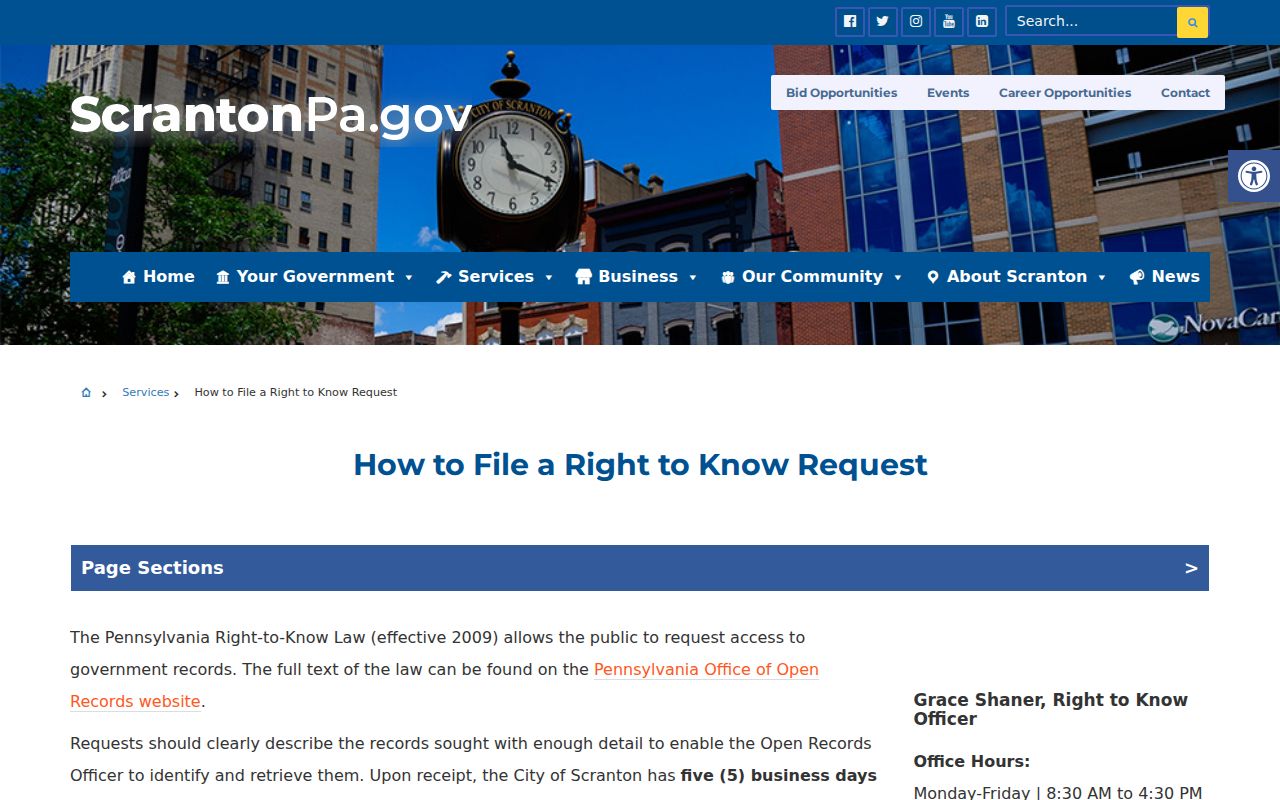
A focused request makes it easier for the City to identify an existing municipal record and for the requester to understand what the response does, and does not, establish.
Historic Scranton Directory Collections
Historical city directories are dated snapshots. They can connect a printed name, occupation notation, address, and abbreviation style to one edition year, but they do not prove continuous residence. The Scranton and Vicinity Business & Street Directory of 1893-94 is especially useful because it combines street listings with a ward-colored map and local institutional material. The Historical Society also documents directories by 1861 and a later Polk reference, while the Board of Trade material warns of gaps in surviving coverage.
The county's creation from Luzerne on August 13, 1878 is another key boundary. A pre-1878 event tied to a modern Scranton address may sit in Luzerne records, not an incomplete Lackawanna index. Use dated maps, legal descriptions, and the library's catalog help when an old address does not line up neatly. The Scranton directory book route provides the full collection and household-tracing method.